

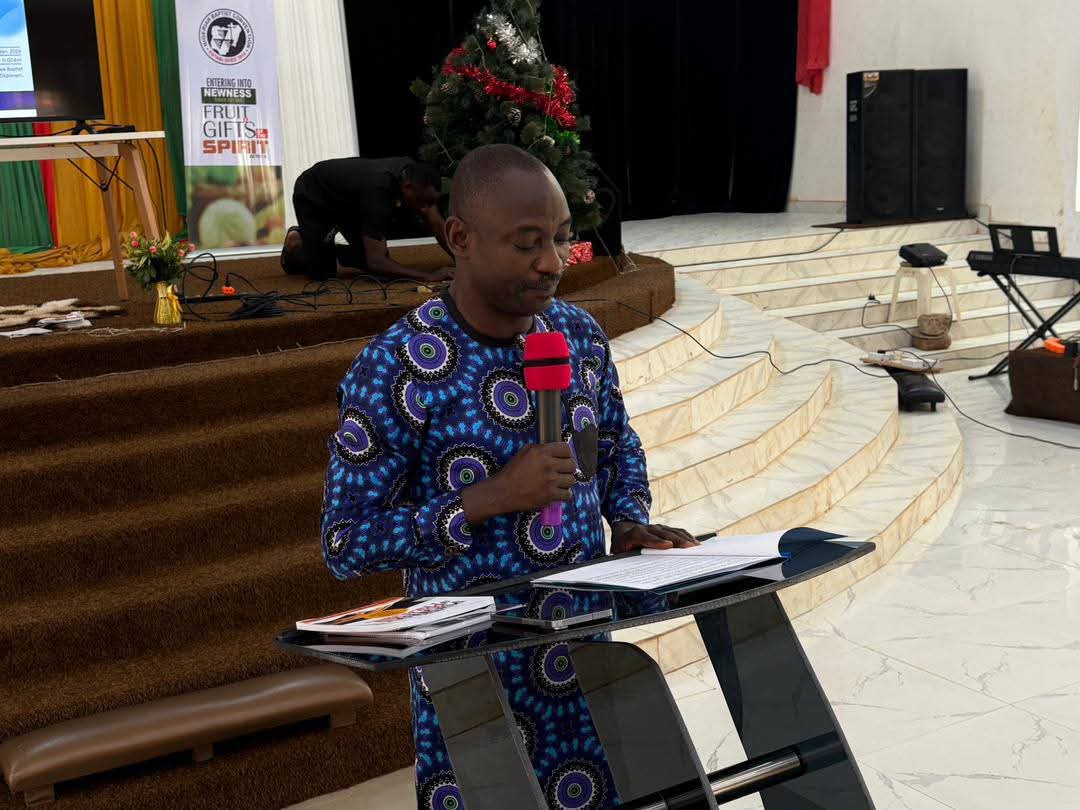
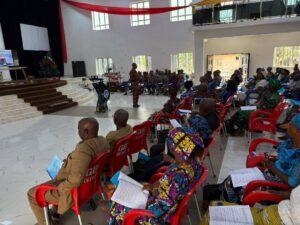
The Anioma Delta Baptist Conference on Saturday, January 17, 2026 convened its General Workers’ Retreat with the theme, “Church Leaders in Modern-Day Ministry,” bringing together pastors, deacons, pastors’ wives and general church workers from across the Baptist denomination in Delta North Senatorial District of Delta State.
The one-day retreat, which was held at Grace Baptist Church, Okpanam, featured a robust teaching session facilitated by Rev’d Dr. Chika Ossai-Ugbah, PhD, of Life Oracles Leadership Centre, Benin City, and focused on the critical place of credibility and trust in contemporary Christian leadership.
In his opening address, the President and Spiritual Leader of the Anioma Delta Baptist Conference, Rev’d Dr. Godspower Utih Dike, spoke extensively on “Credible Leadership (The Law of Solid Ground),” describing credibility as the foundation of influence and sustainable leadership.
“Credibility is the confidence people place in you,” Rev’d Dr. Dike said. “It comes from the Latin word credo, meaning ‘I believe.’ It is not always visible, but like salt in a meal, it changes everything. Leaders who lack credibility may speak, but people no longer truly listen.”
He emphasized that credible leadership is not limited to pastors or conference executives but applies to anyone seeking to influence others, noting that trust, not position or talent, distinguishes leaders who endure from those who fade.
“Effective leaders behave in ways that make people believe in them. Their character and conduct align. They are consistent, honest, approachable and above all, they live what they say,” he added, urging participants to embrace integrity in an era where trust in leadership has been widely eroded.
Rev’d Dr. Dike challenged attendees to approach the retreat as a season of reflection and renewal, calling on them to come with “an open heart, a teachable spirit and a willingness to be shaped.”
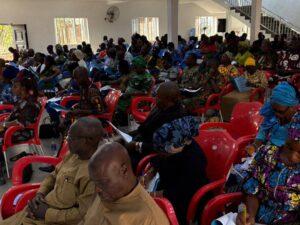
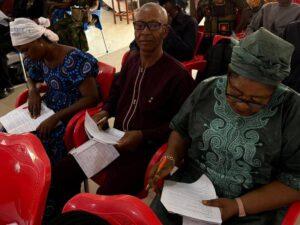
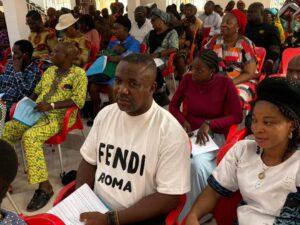
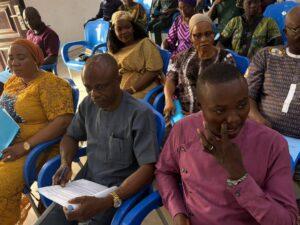
Delivering the main lecture, Rev’d Dr. Chika Ossai-Ugbah taught on “The Law of Standing on Solid Ground: The Rehoboam Crisis of Trust,”drawing lessons from 1 Kings 12 on how leadership collapses when trust is lost.
“Leadership is never sustained by power alone; it is sustained by trust,” he said. “Rehoboam lost a kingdom not because of high taxes, but because trust collapsed. Authority is secured through service, not intimidation.”
According to him, trust is the invisible currency of leadership and the emotional factor that determines whether people will follow a leader’s vision.
“People are always asking two silent questions: Do you care about me, and are you capable of acting in that care? When the answer to either is no, trust disappears,” he explained.
Quoting leadership scholars including John Maxwell, Stephen Covey, Warren Bennis and Peter Drucker, the facilitator described trust as a leadership multiplier that increases commitment, collaboration, performance and openness to change.
Dr. Ossai-Ugbah also outlined reasons leaders lose solid ground, including character failure, damaged reputation, inauthenticity, hidden agendas, self-centred leadership, inconsistency, lack of engagement and absence of generosity.
In another session, he taught on “Credibility Blocks,” using the biblical example of King David to illustrate that authority follows credibility, not the other way round.
“David was trusted before he was crowned,” he noted. “The people affirmed his relationship with them, his proven track record and his divine calling. Only then did authority follow. Leadership credibility is strongest when people see not only what you do, but who God has assigned you to be.”
He further explained that every leader operates in a “trust economy,” introducing the Seven C’s of Credible Leadership that includes, Competence, Connection, Character, Commitment, Consistency, Caring and Centricity which he described as practical pillars for sustaining influence in ministry.
The retreat concluded with a charge to participants to return to their various churches and ministries determined to rebuild trust, strengthen integrity and model servant leadership in line with biblical principles.
Participants described the retreat as timely, insightful and deeply impactful, noting that the teachings addressed contemporary leadership challenges facing the church in a rapidly changing world.