

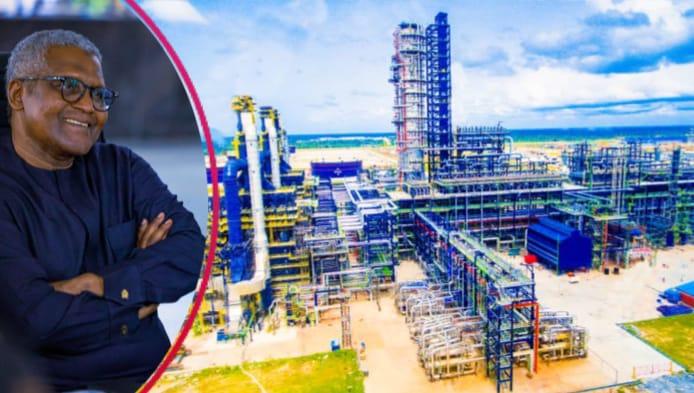
Africa’s largest refinery, owned by Aliko Dangote, has ramped up exports of petrol and urea to several African countries as global supply tightens following the ongoing Iran conflict.
Speaking on Monday during a tour of the facility in Lagos, Dangote disclosed that the refinery, currently operating at its full capacity of 650,000 barrels per day, has helped mitigate the impact of the crisis both within Nigeria and across the African continent.
He assured that the refinery has the capacity to meet fuel demands across West, Central, and East Africa, noting that about 17 cargoes of petrol have already been shipped to various African destinations. In addition, exports of urea fertiliser have risen in recent days as countries seek alternative supply sources.
According to him, the refinery has increasingly shifted focus towards African markets for fertiliser exports, an area it had not previously prioritised, although no specific figures were provided. The plant is capable of producing up to three million metric tons of urea annually, with a significant portion traditionally exported to the United States and South America.
Despite the refinery’s maximum output, fuel prices in Nigeria have continued to climb to record levels, largely due to elevated global crude oil prices. Dangote expressed optimism that sourcing more crude in local currency could help ease domestic fuel costs.
Industry sources indicated that the Nigerian National Petroleum Company Limited is increasing crude supply to the refinery, with seven cargoes allocated for May, up from five in previous months.
Meanwhile, global oil markets remain volatile amid ongoing tensions involving Iran and the United States. Prices edged higher on Monday, with Brent crude trading at $109.13 per barrel and U.S. West Texas Intermediate at $112.31.
Uncertainty persists over the status of negotiations between the two countries, particularly regarding the reopening of the strategic Strait of Hormuz, a vital corridor for global oil shipments. The waterway has remained largely restricted due to Iranian actions following the outbreak of hostilities on February 28.
Although some vessels have recently navigated the route, Iran has limited access based on geopolitical alignments, further straining global supply chains. The disruption has forced refiners in regions such as the United States and Europe to seek alternative crude sources, driving spot prices to record highs.
Efforts to stabilise the market continue, with OPEC+ agreeing to a modest production increase of 206,000 barrels per day for May. However, tensions remain high as Iran insists on a permanent end to hostilities, rejecting a proposed 45-day ceasefire.
With uncertainty surrounding the conflict and its impact on global oil flows, Dangote Refinery’s increased export capacity is emerging as a critical buffer for energy supply across Africa.