
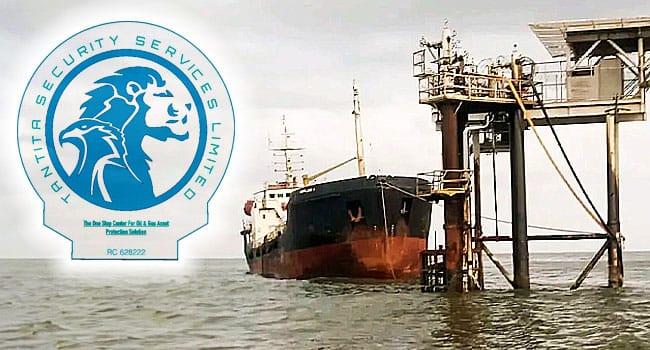
The Joint Committees of the Senate and House of Representatives on Petroleum Resources have declared Tantita Security Services Nigeria Limited a Company of Strategic National Economic Interest, passing a vote of absolute confidence on the firm and the Nigerian National Petroleum Company Limited (NNPCL) for their roles in improving Nigeria’s crude oil production.
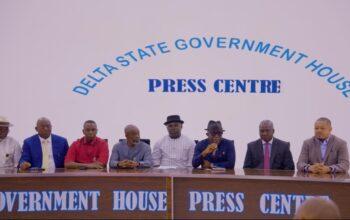
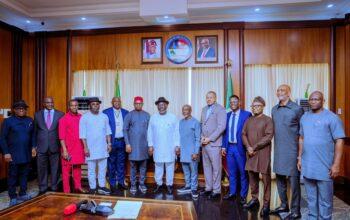
The resolution was reached during a Parliamentary Roundtable on pipeline security and crude oil theft held at the National Assembly in Abuja, where lawmakers, industry operators, and security stakeholders deliberated on strategies to boost production and safeguard critical national assets.
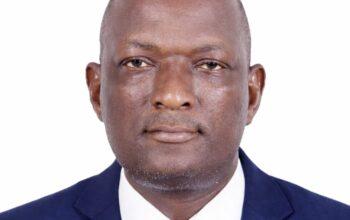
Speaking at the session, the Managing Director of Tantita Security Services Nigeria Limited, Chief Kestin Pondi, attributed Nigeria’s gradual recovery in crude oil output to improved security coordination and active community participation.
He commended the Senate Joint Committees for convening the roundtable, describing it as a crucial platform for addressing challenges in the oil and gas sector.
Pondi recalled that when Tantita was awarded the contract to secure critical oil infrastructure in 2022, Nigeria’s production had declined to about 1.1 million barrels per day, including condensates. He noted that output has since rebounded to approximately 1.4 million barrels per day due to enhanced collaboration.
“We were given this responsibility at a very critical time, and we remain grateful to Mr. President for the opportunity. Without this platform, our capacity and what we can achieve would not have been fully appreciated,” Pondi said.
He stressed that sustainable protection of oil assets depends on the involvement of host communities, describing it as a key pillar of Tantita’s operational model.
“At Tantita, we do not protect assets from the people; we protect the assets with the people. Bringing in those from the creeks, who understand the terrain, has given us better results,” he stated.
Providing further context, Pondi noted that Nigeria’s oil production had steadily declined from about 1.8 million barrels per day in 2020 to 1.6 million in 2021, before reaching its lowest level in 2022, adding that the current recovery highlights the effectiveness of an inclusive security architecture.
He, however, acknowledged the sacrifices made in the course of operations, revealing that personnel from Tantita and various security agencies have lost their lives.
“We have worked closely with the Nigerian Army, Navy, Civil Defence Corps, Police, and other agencies. It has not been an easy journey. We have lost soldiers, we have lost our personnel, and we have lost civil defence officers,” he said.
Despite the progress, Pondi maintained that Nigeria still has the potential to achieve higher production levels with increased investment and sustained reforms.
“We can still do better. There are still barriers, and we need to invest more to fully achieve the President’s agenda of increased production,” he added.
He further disclosed that Tantita has invested significantly in technology and human capital development, while decentralising operations to deepen community involvement and ownership.
Warning against policy fragmentation, Pondi cautioned that disjointed security frameworks could reverse the gains recorded so far.
“There is no way we could have succeeded without involving every community that is a stakeholder in this operation.
“Fragmentation of the process will only push us backwards, and that is something we must avoid,” he cautioned.
The roundtable also provided an opportunity for Tantita to present detailed technical insights into its field operations, challenges, and roadmap for sustaining current gains, as stakeholders reaffirmed the need for coordinated efforts to secure Nigeria’s oil assets and boost production.