

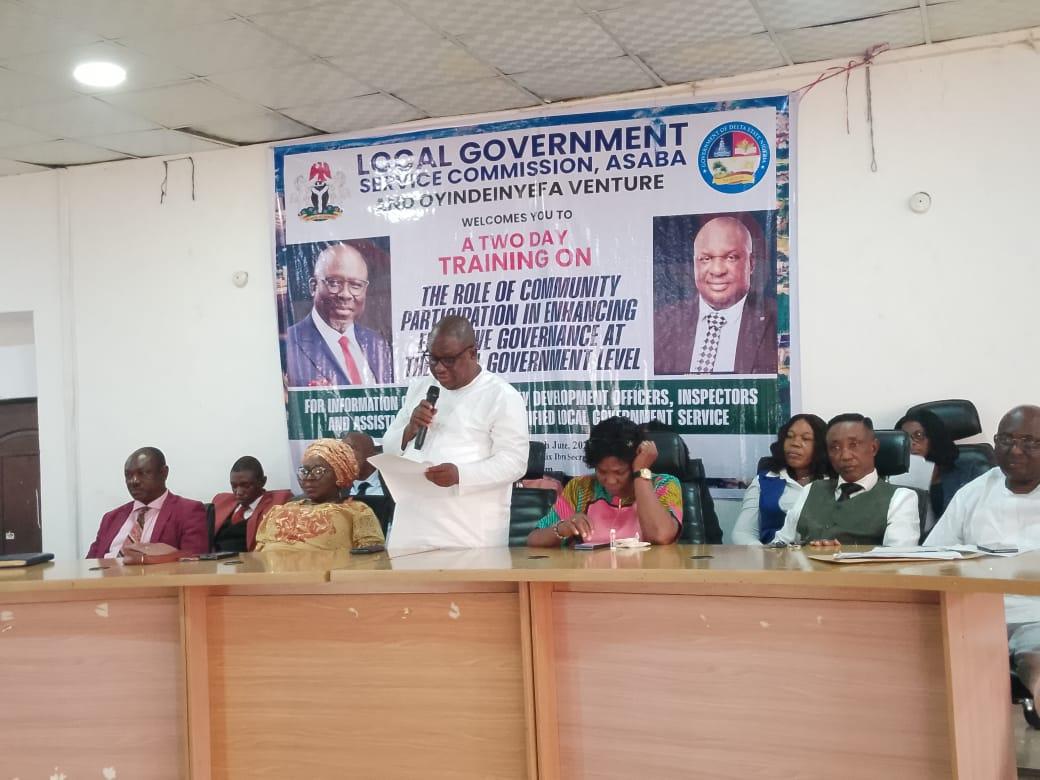
The Delta State Local Government Service Commission (LGSC) has reaffirmed that meaningful community participation remains the cornerstone of effective grassroots governance, urging local government personnel to actively involve citizens in planning and implementing development programmes.
The charge was given by the Chairman of the Commission, Hon. (Pst.) Joseph Otirhue, during the opening of a capacity-building seminar for 99 officers of the Unified Local Government Service drawn from the Delta North Senatorial District.
The training, held at the Olorogun Felix Ibru Secretariat in Asaba, forms part of the Commission’s sustained efforts to strengthen the capacity of local government workers across the state.
Declaring the seminar open, Otirhue noted that local governments were established to deliver essential services directly to the people and could only achieve this mandate through the active participation of the communities they serve.
He said, “Community participation is not merely desirable; it is indispensable to effective local governance.
“When citizens are actively involved in identifying their needs, contributing to decision-making, implementing projects and monitoring government activities, development becomes more inclusive, transparent and sustainable.”
The Commission Chairman explained that engaging residents in governance, enhances public confidence, promotes accountability and improves service delivery.
According to him, communities that participate in government programmes are more likely to take ownership of development projects, thereby ensuring their protection, maintenance and long-term sustainability.
“Community participation creates a genuine partnership between government and the people. It enables citizens to understand government policies, budgets and projects while encouraging public officials to remain accountable for their actions.
“This partnership is essential for achieving sustainable development and good governance,” he stated.
He therefore urged participants to embrace collaboration with community stakeholders in the discharge of their responsibilities, stressing that every development initiative should reflect the aspirations and priorities of the people.
Otirhue also expressed concern over the attitude of some local government councils towards staff development, lamenting that training opportunities provided by the Commission were sometimes poorly attended despite the substantial resources committed to them.
“The Commission invests enormous time, effort and resources in training because we believe that a knowledgeable workforce is critical to efficient service delivery.
“I encourage every participant to take this seminar seriously, apply the knowledge gained in your daily responsibilities and share what you have learnt with your colleagues upon returning to your respective duty posts,” he advised.
Also speaking, the Second Member of the Commission, Dame Minnie Igbrude, encouraged participants to distinguish themselves through diligence, professionalism and commitment to duty.
She urged them to consistently demonstrate readiness for work, noting that dedication and reliability would earn them greater responsibilities and career opportunities.
The seminar featured presentations by experienced resource persons, including Chief Daddi Friday Amudo and Dr. Sheila Isagba, who took participants through practical sessions on community engagement and participatory governance.
The event was attended by members of the Commission, directors and other senior officials.