

The Delta State Executive Council has approved N4 billion for the empowerment of 15,000 indigent residents across the state to support small businesses, promote entrepreneurship and cushion the effects of economic hardship.
The beneficiaries will be drawn from the 25 local government areas under the initiative, which is designed to improve livelihoods, strengthen purchasing power and provide financial assistance to vulnerable residents.
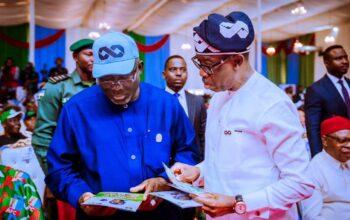
Commissioner for Works (Rural Roads) and Public Information, Mr Charles Aniagwu, disclosed this while briefing journalists at the end of the State Executive Council meeting presided over by Governor Sheriff Oborevwori at Government House, Asaba.
He was accompanied by the Chief Press Secretary to the Governor, Sir Festus Ahon.
Aniagwu said the programme would be implemented through the Delta State Social Investment Programme in the coming weeks, adding that the governor had directed that beneficiaries be selected based on clearly defined eligibility criteria.
He explained that priority would be given to indigent residents already operating small businesses, aspiring entrepreneurs seeking start-up capital and vulnerable persons requiring financial assistance to improve their living conditions.
According to the commissioner, the grants would help existing businesses overcome economic challenges, enable aspiring entrepreneurs to establish micro-enterprises and assist beneficiaries in meeting pressing needs.
He said the intervention reflected the government’s determination to ensure that the gains of ongoing economic reforms translated into tangible benefits for ordinary Deltans.
In another major decision, the council approved compensation for land acquired in the central senatorial district for agricultural purposes.
Aniagwu said the decision followed deliberations at previous economic summits, where the need to make land available for large-scale farming and agricultural investments was identified as a priority.
He noted that the government was taking deliberate steps to attract commercial farmers from within and outside Nigeria while creating opportunities for local farmers to expand their operations.
The initiative, he added, would improve access to agricultural land and make the state’s land bank more attractive to investors, with the potential to boost food production, create employment and expand economic opportunities.
As part of preparations for the 2027 fiscal year, the council also approved the Economic and Fiscal Updates, Fiscal Strategy Paper and Budget Policy Paper to guide the formulation of the state’s next budget.
Aniagwu said the documents would provide the economic assumptions, revenue projections and policy direction needed for realistic budget planning.
He observed that anticipated stability in the naira could support government planning, although fluctuations in international crude oil prices remained a potential factor in revenue projections from the Federation Account.
The council also directed the Ministry of Health to explore the expansion of free medical outreach services to riverine communities to improve access to healthcare.
The directive followed a recent medical outreach in communities affected by oil spillage, organised after Governor Oborevwori visited the affected areas and directed the provision of medical assistance to residents.
According to Aniagwu, the exercise recorded an encouraging response, with residents from neighbouring communities travelling to benefit from the services after learning about the programme.
He said the governor had consequently directed the ministry to consider making the outreach services more regular to ensure that residents of riverine communities had improved access to medical care.
In a related development, the council approved the construction of a clubhouse for civil servants at the State Secretariat in Asaba as part of efforts to enhance workers’ welfare.
Aniagwu clarified that the facility would provide civil servants with a dedicated space to meet, socialise and relax outside official working hours.
He said the various approvals demonstrated the administration’s commitment to social investment, agricultural development, workers’ welfare and human capital development, alongside its ongoing infrastructure projects.