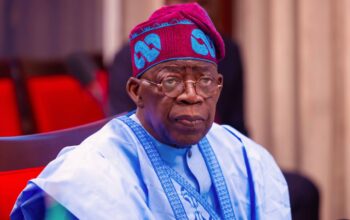

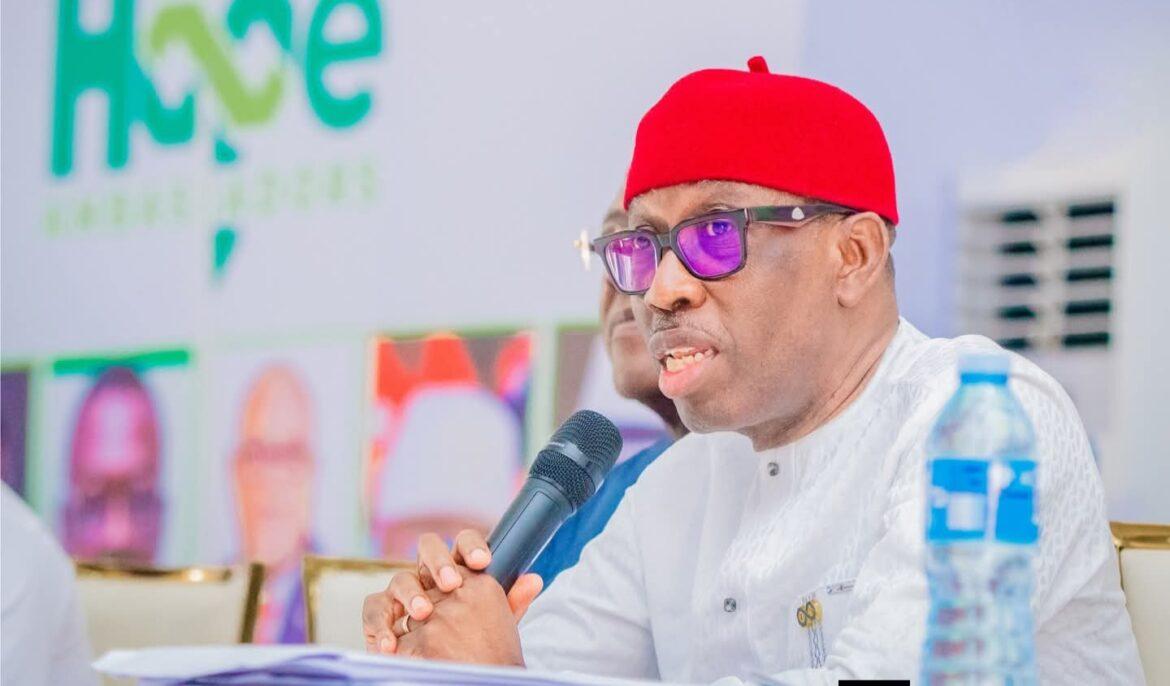
Public discourse is healthiest when it is informed by facts, context and fairness rather than selective recollection. The renewed criticism of former Delta State Governor, Senator Dr. Ifeanyi Arthur Okowa, over the abandoned Issele-Uku Township Stadium provides yet another opportunity to reflect on the importance of assessing public office holders through a balanced historical lens.
There is no disputing the fact that the Issele-Uku Township Stadium remained uncompleted throughout Senator Okowa’s eight-year administration. It is also true that the project had already been abandoned before he assumed office in 2015. These are verifiable facts that should neither be denied nor distorted.
However, reducing the developmental history of Aniocha North Local Government Area during the Okowa administration to the fate of a single project does not present the complete picture.
When Senator Okowa took over the reins of government, the most pressing concern confronting the people of Aniocha North was not the township stadium. The overwhelming demand from residents, community leaders and stakeholders centred on the deplorable condition of the area’s road infrastructure. Several strategic roads had deteriorated beyond mere inconvenience, becoming serious obstacles to economic activities, healthcare delivery, education, agriculture and general social mobility.
The Issele-Uku–Issele-Mkpitime–Onicha-Olona Road had become almost impassable. The Onicha-Uku–Ukwu-Nzu Road had fallen into a state of disrepair that frustrated commuters and residents alike. The Issele-Uku Road linking the Benin-Asaba Expressway to Onicha-Ugbo had become severely deteriorated, while the Idumu-Ogo–Obomkpa and Obomkpa–Ugboba roads equally required urgent government intervention.
These roads were lifelines for the people. Their poor condition affected virtually every aspect of daily living and represented a greater immediate challenge than recreational infrastructure.
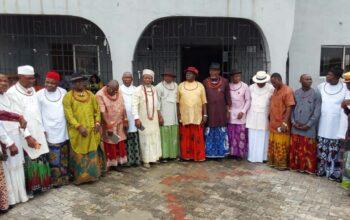
It is therefore significant that following sustained advocacy by respected leaders and stakeholders from Aniocha North, Governor Okowa’s administration prioritised the reconstruction of these critical road networks. Those projects were not merely announced; they were executed, completed and commissioned. They substantially improved transportation, boosted commercial activities and enhanced the quality of life across several communities within the local government area.
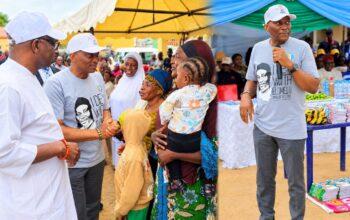
The former governor personally visited Aniocha North on multiple occasions to commission completed projects, demonstrating the administration’s commitment to addressing the infrastructural concerns identified by the people.
This editorial does not suggest that the abandonment of the Issele-Uku Township Stadium should be overlooked. Public infrastructure projects deserve completion irrespective of the administration that initiated them. Government owes citizens continuity in development, and unfinished projects often represent missed opportunities for communities.
Available information also indicates that efforts were reportedly initiated during the Okowa administration to revive work on the stadium before progress eventually stalled for reasons that were never publicly explained. Whether the setback resulted from funding limitations, contractual issues or administrative challenges remains known only to those directly involved in the project.
Another recurring criticism has been the perception that Senator Okowa concentrated more development projects within his Ika homeland. Such perceptions are legitimate subjects of public debate and democratic scrutiny. Nevertheless, every fair assessment must also acknowledge that Aniocha North and several other parts of Delta State benefited from significant infrastructure investments under his administration. Recognising those achievements does not diminish the validity of calls for more equitable project distribution across the state.
At cshowcasenews.com, we believe that history should neither be rewritten to suit present political narratives nor selectively interpreted to diminish genuine developmental achievements. Every administration leaves behind both completed and unfinished projects. The true test of leadership lies in evaluating whether government responded to the prevailing needs of the people during its time in office.
In the case of Aniocha North, available evidence suggests that the reconstruction of critical road infrastructure addressed what residents widely considered their most urgent challenge. Those roads, many of which had become virtually unusable, today remain enduring assets that continue to serve thousands of people.
As stakeholders continue to advocate for the completion of the Issele-Uku Township Stadium, that advocacy deserves broad support. At the same time, fairness requires that the conversation also acknowledge the substantial road infrastructure delivered during the Okowa administration.
Balanced assessment, rather than selective remembrance, remains the surest path to preserving the integrity of our collective history. Democracy is strengthened not by one-sided narratives but by honest evaluations that recognise both the shortcomings and the accomplishments of those entrusted with public office.